
LGBTQ+ Couples Therapy: What Makes It Different?

Understanding the Unique Experiences That Can Shape LGBTQ+ Relationships
Every couple develops their own patterns of conflict, connection, closeness, and disconnection. LGBTQ+ couples are no different, and they experience the same desire to feel loved, chosen, and understood by their partner.
At the same time, LGBTQ+ couples may navigate experiences that are less common to straight/cisgender relationships. Family rejection, minority stress, coming out, gender identity, cultural expectations, and navigating levels of visibility can all become part of a relationship’s emotional landscape.
This does not mean that LGBTQ+ relationships are inherently more difficult. It means that sometimes there are additional layers to understand.
When the Outside World Enters the Relationship
A couple may feel closely connected to one another while still feeling the impact of what happens around them. Maybe one partner is comfortable being openly queer at work, while the other is more cautious. One partner may want to hold hands in public, while the other worries about how people will respond. A couple may disagree about whether to correct a family member who uses the wrong pronouns or whether to attend a family gathering where they may not be fully accepted.
On the surface, these can look like disagreements about what to do.
Underneath, there may be much more vulnerable questions like:
"Are you going to stand with me?"
"Will you protect me if someone hurts me?"
"Can I trust you to understand why this is so difficult for me?"
"Do I matter enough for you to take a risk with me?"
These moments can become emotionally charged because they may touch on experiences that existed long before the current disagreement.

Coming Out Can Continue to Shape a Relationship
Coming out is not always a single event but rather, for many queer people, there can be multiple coming out experiences throughout life with friends, family, coworkers, children, religious communities, or new social circles.
Partners may also be at different places in their own journeys.
One partner may feel ready to be open with everyone, while the other is still figuring out what feels safe. One may experience privacy as protection, while the other experiences it as rejection or shame.
A conflict about who knows may actually be a conflict about what safety means.
Couples therapy can create space to slow these moments down and explore what is underneath them rather than immediately deciding who is right.
Gender and Sexuality Can Be Part of the Relationship’s Story
Gender and sexuality may evolve during relationships.
A partner may come out as bisexual, queer, transgender, or nonbinary after years together. A couple may be navigating changes in identity, attraction, pronouns, presentation, or how they understand their relationship.
These transitions can bring excitement, relief, and authenticity. They can also bring uncertainty and grief.
A partner might think:
"I'm so happy that you finally feel like yourself. But what does this mean for us?"
And the other partner may be wondering:
"Can I be fully myself without losing the person I love?"
Both experiences can be real at the same time.
Therapy does not need to decide what a relationship should look like. Instead, it can help partners slow down enough to understand what is happening emotionally and determine what they want to build together.
LGBTQ+ Couples Deserve More Than "LGBTQ+-Friendly" Therapy
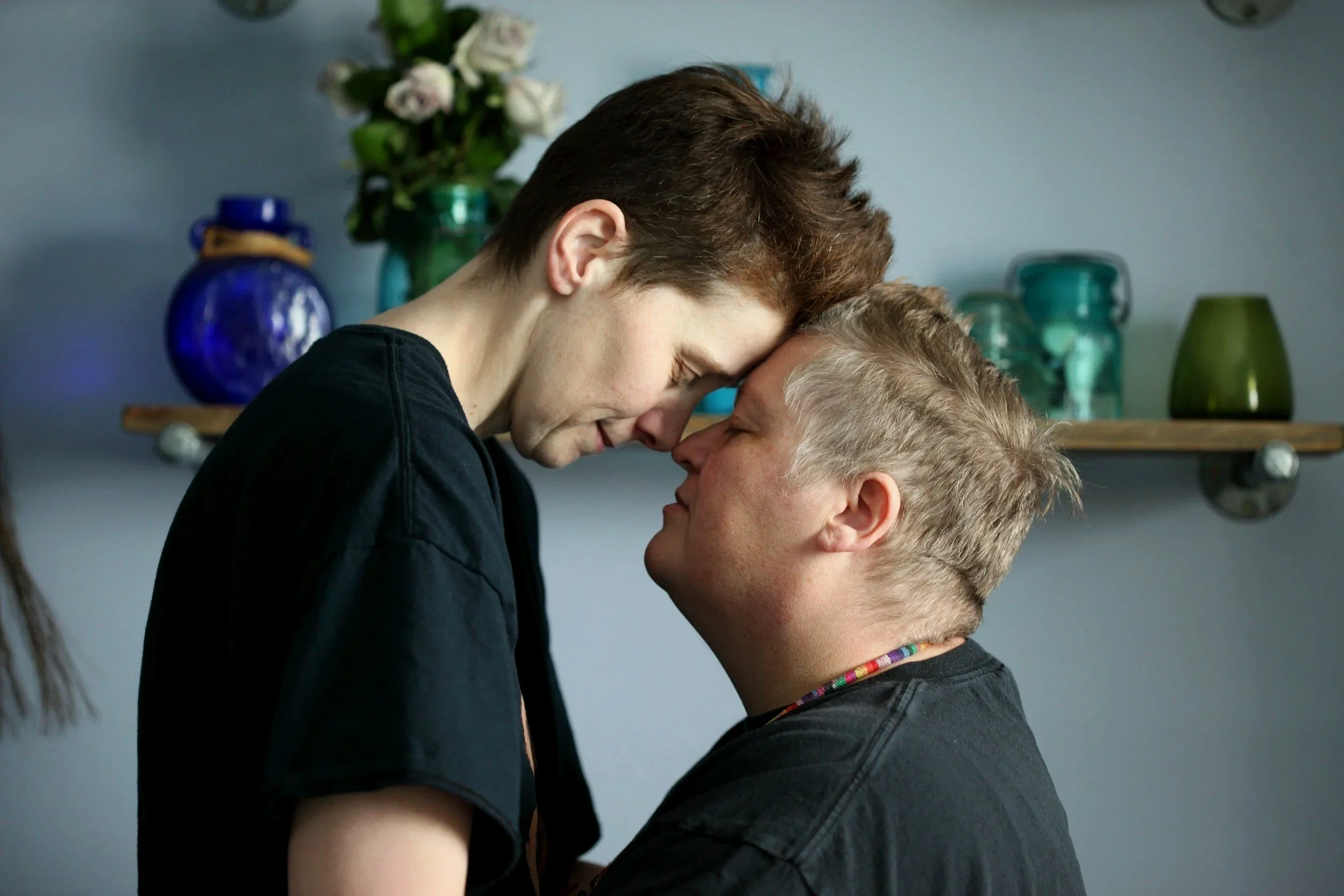
Finding a therapist who is affirming is important, but LGBTQ+ couples may want to consider what that actually means.
Affirming therapy is not simply knowing the right terminology or having worked with LGBTQ+ clients before. It can also mean understanding how minority stress, family dynamics, cultural expectations, gender, sexuality, and social experiences can intersect with the couple's attachment needs.
It means not automatically assuming that one partner's experience is more valid than the other's.
It means being able to talk about sexuality and gender without treating them as problems to solve. It means recognizing that LGBTQ+ couples are not all the same. A queer interracial couple, a transgender couple, a bisexual person in a heterosexual-presenting relationship, and a same-gender couple may have very different experiences.
There is no single LGBTQ+ relationship experience.
Sometimes the Fight Is About More Than the Fight
Just like in any relationship, LGBTQ+ couples can become caught in cycles.
One partner pushes for reassurance while the other withdraws. One feels abandoned. The other feels overwhelmed. The conversation becomes increasingly focused on who did what, while the deeper emotional experience remains hidden underneath.
Sometimes the outside world adds another layer to that cycle.
A partner who has experienced rejection may become especially sensitive to signs of abandonment. Another partner may respond by shutting down because they feel they can never get it right.
The question then becomes less about "How do we stop arguing?" and more about:
"What happens inside each of us when we don't feel safe, chosen, or understood?"
That is often where meaningful change begins.
LGBTQ+ Couples Don't Need to Be "Fixed"
Your relationship does not need to look like anyone else's relationship to be a healthy one.
Maybe you are navigating differences in identity. Maybe your families have different levels of acceptance. Maybe you are trying to rebuild trust after coming out later in life. Maybe you are simply having the same arguments every couple has and want to understand what keeps pulling you apart.
LGBTQ+ couples deserve a space where all of these experiences can be explored without having their identities treated as the problem.
Learn More About LGBTQ+ Couples Therapy in Denver
LGBTQ+ couples therapy can provide a space to slow down conflict, recognize the emotional patterns underneath, and build a stronger sense of safety and connection. Through an attachment-based approach such as Emotionally Focused Therapy (EFT), couples can begin to recognize the cycles that leave them feeling alone and practice new ways of reaching for one another.
If you're looking for LGBTQ+ couples therapy in Denver and want support that is affirming, culturally responsive, and grounded in attachment, we can help. Reach out today for a free 20-minute consultation to see whether couples therapy may be a good fit for your relationship.